
Presenter Profile
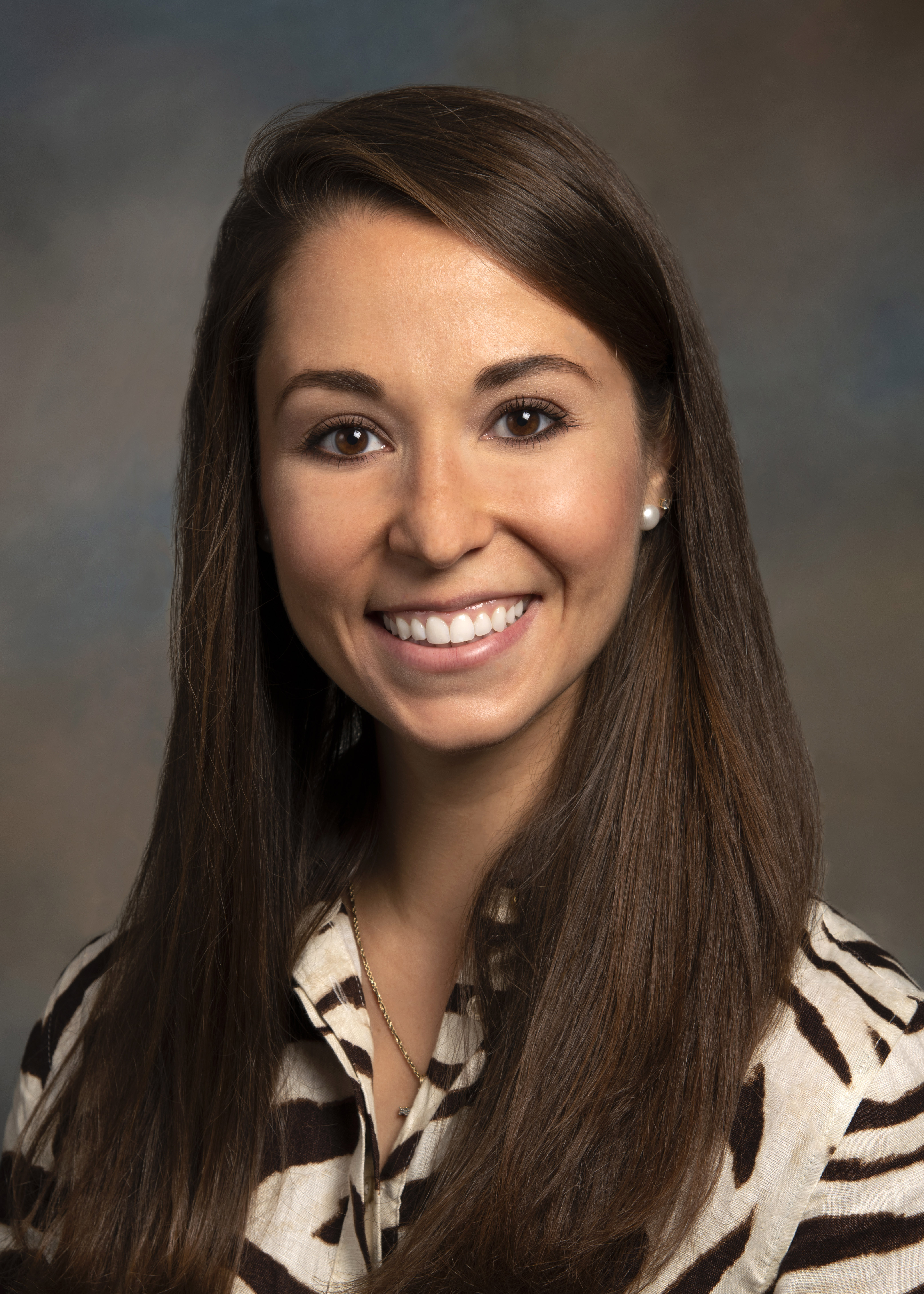
Elizabeth Hendrickson, MD
Fellow, Pediatric Emergency Medicine
University of Alabama at Birmingham (UAB)
epoulos@uabmc.edu
Elizabeth Hendrickson, MD, is a third year pediatric emergency medicine fellow at the University of Alabama at Birmingham/Children's of Alabama. She received her Bachelors of Science in Science and Religion from Samford University before obtaining her medical degree at UAB. She completed her pediatrics residency at Washington University in St. Louis where she developed a passion for injury prevention and advocacy. Her research interests include using qualitative methods to investigate the physician-patient relationship in firearm injury prevention counseling.
Presentations
High Risk and Demanding More: Adolescent Perspectives on Firearm Exposure and Safety Counseling
Elizabeth Hendrickson, MD
Jennifer Schanzle, DO
Tabitha Kearns, MD
Tamera Coyne-Beasley, MD, MPH
In the United States, firearms are the leading cause of death in children and adolescents with especially high burden for Black/African Americans, urban youth, and those in the Deep South. Behavioral programs that encourage youth to stay away from firearms have not reduced rates of firearm violence. There is paucity of data that focuses on youth experiences of firearm exposure and their perspectives on firearm counseling.
Patients were recruited for this mixed-methods study from Adolescent Health of a tertiary care hospital in the Deep South. All adolescents 14-19 years old who were able to give informed consent were considered eligible; those who were considered “in crisis” by their provider or unable to read English were excluded. Participants were de-identified and asked to answer a survey and participate in an interview. The survey combined custom and validated questions from the Youth Risk Behavior Surveillance System. Interviews were recorded, transcribed, and coded via thematic inductive analysis by three study team members. Participants were monetarily compensated.
Forty-eight adolescents met inclusion criteria and agreed to participate in the survey alone, most were non-Hispanic (91.3%), black or African American (68.9%), and female (68.1%). Majority were in twelfth grade (35.9%) or college (23.1%). Over half reported having a gun in the home; of these, the majority disclosed they would be able to access the firearm in less than five minutes (Table 1). Fortunately, most have not been threatened by a firearm at school (Table 1).
Of the survey participants, twenty-four interviews were completed before reaching thematic saturation. Several themes emerged: reliance on social media for news and education, experience of serious and life-threatening exposure to firearm violence, early exposure to personal gun use, fear of firearms yet belief they are necessary for personal safety, experience of inadequate firearm safety education at school, and confusion about physicians’ roles in firearm violence prevention counseling with preference to receive education from perceived firearm experts (Table 2).
Interviews concluded with adolescents sharing ideas for firearm safety education. There was a clear preference for interactive media platforms and small in-person group sessions. They expressed direct interest in receiving information on how to properly use a firearm and how to provide first aid safety measures during a shooting.
Our results present a challenge to pre-existing strategies for firearm injury prevention counseling. By centering adolescent voices in the Deep South, the population at greatest risk of firearm-related injury and death, we have identified many gaps in current counseling goals and their realistic efficacy. Further steps are necessary to review and revise counseling practices that currently center around safe storage and youth firearm abstinence to better address the true needs of the at-risk populations we serve.
1. Recognize disparities in firearm exposure and risk among adolescents in the Deep South including racial and urban differences.
2. Describe adolescents’ experiences, perceptions, and preferred methods for firearm safety education.
3. Apply adolescent-informed insights to improve firearm injury prevention counseling and strategies.
Improving Firearm Injury Prevention Anticipatory Guidance in Primary Care: A Qualitative Study
Elizabeth Hendrickson, MD
Jennifer McCain, MD
Emma Sartin, PhD, MPH
Firearm injuries are the leading cause of death among children and adolescents in the United States, yet firearm injury prevention counseling remains inconsistently implemented in pediatric primary care. Rates of firearm-related injury and death are highest in the Deep South, where we hypothesized that unique cultural and political factors may influence counseling practices. This study sought to characterize pediatricians’ knowledge, beliefs, and practices regarding firearm injury prevention counseling in the Southeastern United States.
We conducted semi-structured qualitative key informant interviews with pediatric primary care providers practicing in Alabama, Florida, Georgia, Louisiana, Mississippi, and Tennessee as part of a concurrent mixed methods study. Participants were recruited through professional listservs affiliated with academic institutions and American Academy of Pediatrics state chapters. Interviews were conducted remotely, audio-recorded, transcribed verbatim, and analyzed using an iterative deductive-inductive thematic approach. Two trained qualitative researchers independently coded transcripts using Dedoose software until consensus was reached. Recruitment continued until thematic saturation was achieved.
Fourteen pediatric providers completed interviews. Participants unanimously recognized firearm injury prevention counseling as important but described substantial variability in counseling timing, frequency, and content. Themes clustered into physician-specific, patient-specific, and systems/resource-related barriers and facilitators.
Physician-level barriers included lack of personal firearm experience, inadequate residency training, and low confidence discussing firearm safety. Physicians who did not own firearms reported difficulty providing practical safe-storage guidance. Facilitators included personal firearm ownership, practice in smaller or rural communities, and prior experiences caring for firearm injury victims, all of which increased comfort and motivation to counsel.
Patient-level barriers included perceived caregiver defensiveness, reluctance to disclose firearm ownership, and lack of engagement with counseling. However, physicians reported that counseling was often better received among families involved in hunting or recreational firearm use and during discussions surrounding adolescent risk-taking or mental health concerns.
Systems/resource-related barriers included limited visit time and perceived ineffectiveness of current educational handouts. Facilitators included access to free gun locks, state AAP chapter educational resources, and interest in brief office-based media tools such as videos or digital educational content.
Pediatricians in the Deep South identified practical, not solely cultural or political, barriers to firearm injury prevention counseling. Interventions focused on improving residency training, increasing access to tangible resources such as gun locks, and developing realistic, regionally appropriate educational tools may improve implementation of firearm safety anticipatory guidance in pediatric primary care.
1. Identify physician, patient, and system-level translational barriers to firearm injury prevention counseling in pediatric primary care.
2. Describe facilitators associated with increased physician comfort and frequency of firearm safety counseling.
3. Discuss opportunities for implementation-focused interventions to improve firearm injury prevention.