
Presenter Profile
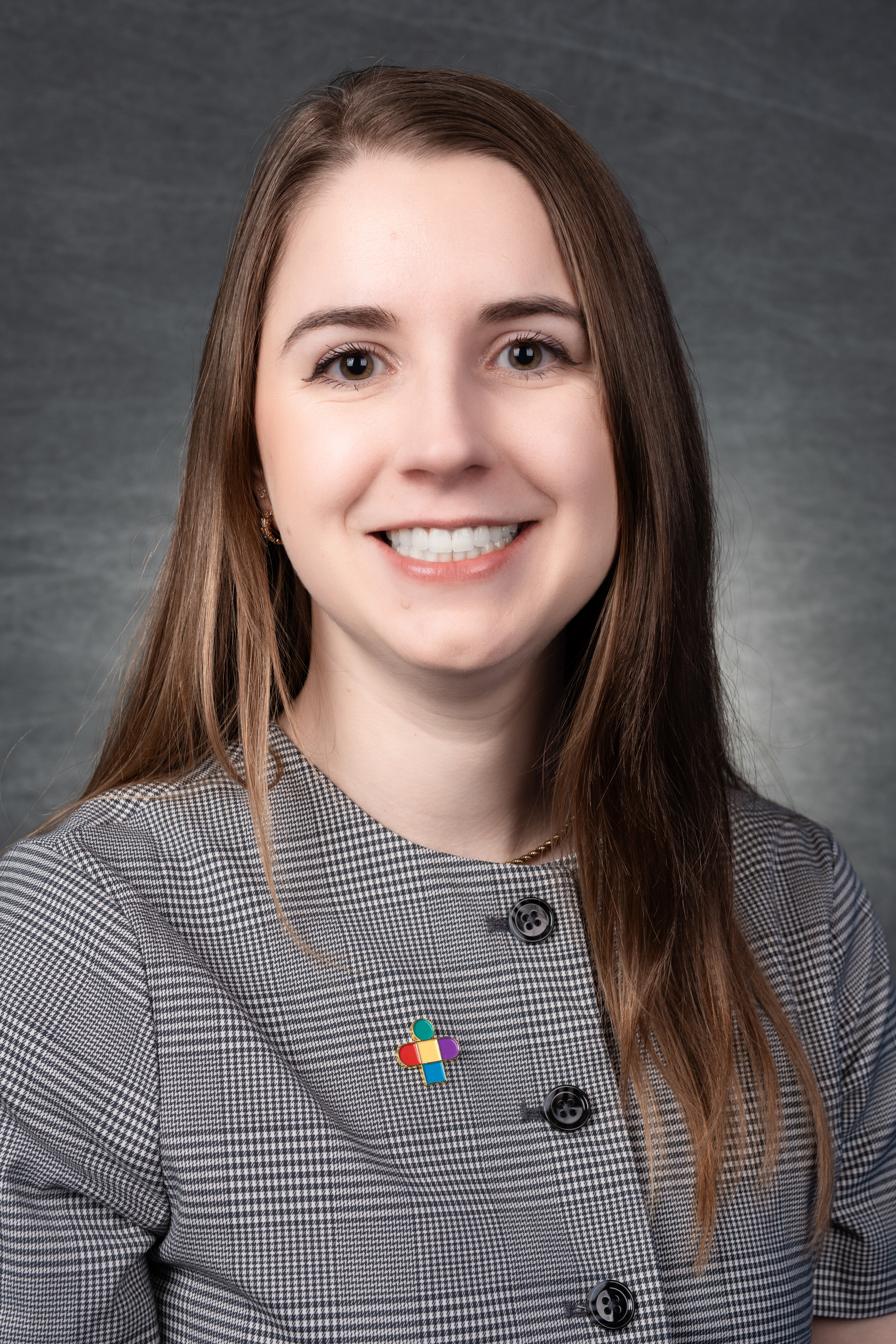
Kristen Volz-Spessard, MS
She|Her|Hers
Youth Suicide Prevention Program Specialist
Question, Persuade, Refer Gatekeeper Instructor
Youth Suicide Prevention Center|Injury Prevention Center|Office for Community Child Health
282 Washington Street | Hartford, CT 06106
860.837.5308 | kvolz@connecticutchildrens.org
Youth Suicide Prevention Center: hope@connecticutchildrens.org
Kristen Volz-Spessard, MS, is the Program Specialist for the Connecticut Children's Youth Suicide Prevention Center. She supports and oversees youth suicide prevention initiatives at Connecticut Children's, which includes community-based programs, development of clinical pathways, quality improvement projects, research, and advocacy. She oversees the universal suicide screening program within the hospital (ED/Inpatient). She has 5 years of experience ensuring sustainability and compliance screening program. She has been a certified Question Persuade Refer (QPR) gatekeeper instructor since 2021. She provides these lifesaving suicide prevention trainings to team members, community organizations, colleges, and other groups throughout the state of Connecticut. Additionally, she supports the business development and network expansion for Jordan Porco Fresh Check Day programs to increase mental health awareness across campuses. She also serves as the Academic Coordinator for the Connecticut Chapter of the American Academy of Pediatrics’ s annual meeting. She earned her Master’s in Science in Health Promotion, as well as a graduate certificate in Health Psychology.
Presentations
Fresh Check Day’s Impact on Historically Black Colleges and University Campuses
Kristen Volz-Spessard, MS
Meghan Fish, MS
Nicholas Marinelli, MPA
Cara During, BA
Isabella Baldino, BS
Rebecca Beebe, PhD
Kevin Borrup, DrPH, JD, MPA
Steven C. Rogers, MD, MS
Suicide is the second leading cause of death among college-aged young adults with certain racial and ethnic groups experiencing higher rates. Between 2018 to 2021, the age-adjusted suicide rate among Non-Hispanic Black or African American individuals increased by 19.2%. Black youth and young adults between 10- to 24-years-old experienced a 36.6% increase overall in suicide rates – the fastest growing rate among racial groups. These trends highlight the urgent need for suicide prevention efforts tailored to this high-risk population. Fresh Check Day (FCD) is a peer-driven mental health promotion and suicide prevention program designed for college students. The program aims to reduce stigma, increase awareness of available mental health resources, and encourage help-seeking behavior through interactive booths, campus-wide collaboration, and student engagement. Historically Black Colleges and Universities (HBCUs) enroll a student body that is predominantly Black, therefore enabling FCD to effectively evaluate its impact on mental health and suicide prevention within this at-risk population. This analysis determines if post-survey key metrics differ significantly between students attending HBCUs and non-HBCUs.
Between January 2014 and May 2025, 1,517 FCDs occurred at colleges across 46 states, including 7 HBCU campuses. Following each FCD event, anonymous post-event surveys were administered to assess student perceptions, knowledge gains, and changes in attitudes toward mental health. Chi square tests for independence were conducted to examine differences between HBCU status and binary post–FCD outcomes, including awareness of suicide warning signs, preparedness to help a friend, awareness of mental health resources, likelihood of seeking help, and comfort talking about mental health and suicide.
Since 2017, 109,526 students completed the post-event survey, of which 894 students attended a HBCU. Among students attending an HBCU, 90% reported feeling more prepared to help a friend exhibiting warning signs of suicide; 90% were more aware of mental health resources available to them; 89% were more likely to ask for help if experiencing emotional distress themselves; 88% felt more comfortable talking about mental health and suicide and 85% more aware of the warning signs of suicide. Chi-square tests of independence indicated significant associations, with small effect sizes, between HBCU status and awareness of warning signs, ?²(1, N = 109,526) = 16.18, p < .001, ? = .012; preparedness to help, ?²(1, N = 109,526) = 31.97, p < .001, ? = .017; awareness of resources, ?²(1, N = 109,526) = 8.79, p = .003, ? = .009; likelihood of asking for help, ?²(1, N = 109,526) = 24.48, p < .001, ? = .015; and comfort talking about mental health and suicide, ?²(1, N = 109,526) = 20.96, p < .001, ? = .014.
Students from HBCUs demonstrated significantly higher awareness and preparedness FCD outcomes compared to students from non-HBCUs, although effect sizes suggested limited practical differences between groups. Implementing FCD on HBCU campuses may prevent suicide deaths.
1) Understand the importance of effective suicide prevention programs for HBCU campuses
2) Describe FCD HBCU students’ reported perceptions, knowledge gains, and changes in attitudes toward mental health
3) Illustrate comparisons across HBCU vs non-HBCUs in responses to key metrics
Check In with your Mental Health and Connecticut Children’s Youth Suicide Prevention Center!
Kristen Volz-Spessard, MS
Steven C. Rogers, MD, MS
Check In is a mental health wellness single day program lasting from two to four hours that takes place at schools, workplaces, and in the community. Check In is an adapted version of Fresh Check Day that engages participants in conversations that improves mental health awareness and reduces stigma through educational and interactive activities in a festive atmosphere. Connecticut Children’s Youth Suicide Prevention Center (YSPC) Fresh Check Day, originally created by the Jordan Porco Foundation, is an evidence-informed mental health promotion and suicide prevention program for college aged students. Fresh Check Day is also listed as a Best Practice in the Suicide Prevention Resource Center. The Connecticut Children’s YSPC team will be presenting on the structure, design, and impact of the Fresh Check Day and Check In programs, followed by an immersive modified experience of the Check In program tailored for the conference attendees. We will share the methods and approaches to applying Check In in either a “lunch and learn” model or singular event model within school, work, and community environments.
Join Connecticut Children’s YSPC for an immersive mental health fair, Check In. Check In incorporates mental health messaging with engaging activities in a festive environment. It aims to reduce stigma and connect participants to resources. Learn how to apply Check In to any environment and check in on your mental health through this interactive presentation.
Content Outline: The YSPC will further describe the programs, Fresh Check Day and Check In, suicide prevention programs that combine simple mental health messaging with engaging activities, working to reduce isolation and stigma and normalize conversations around mental health. This presentation will include a description of the programs, data about the impact of the programs, and the two frameworks in which the Check In program can be adapted: a lunch and learn framework, and a single event fair-like framework. The YSPC will then demonstrate an immersive modified version of Check In with conference attendees. Attendees will engage in several of Check In’s booths and participate in the activities. The YSPC will then conclude with a presentation on how to adapt Check In to any environment, and the impact of incorporating Check In to their existing wellness and prevention programs.
1. Understand how the Fresh Check Day and Check In programs reduces stigma and fosters help-seeking behaviors through effective mental health messaging
2. Learn how to apply the Check In program, with adaptable frameworks, to any school, community space, or workplace environment
3. Check in on their own mental health through a modified immersive Check In program